
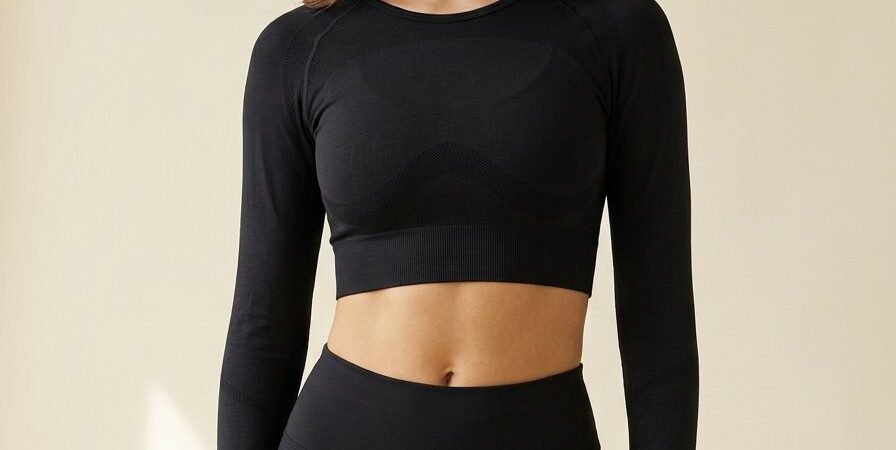
Most leggings are cut-and-sew: flat fabric panels cut from a roll and stitched together. Seamless leggings are knitted in one piece on a circular machine, with the structure – compression zones, vent panels, contouring – built into the knit itself. The difference is not marketing. It is where the tension lives.
Why seams fail you mid-set
A seam is a stiff line in a stretchy field. When the fabric stretches around your thigh or seat, the seam does not stretch equally, so tension piles up beside it: that is the chafe line after a long session, the waistband that rolls because the seam lost its recovery, and the side seam that digs in when you brace. In a squat the panel can stretch 40-60 percent; the seam allowance stretches less, so something has to give – usually your skin.
What seamless changes
- No side seam to dig in when you reach, brace or twist – the panel stretches as one field.
- Zoned engineering: compression, mesh vent zones and contouring are knitted in, not stitched on, so move with you.
- Fewer failure points: no stitched seam to unravel after a hundred washes.
When cut-and-sew still wins
Printed fabrics and sharp colour-blocking usually need cut-and-sew construction, and a great cut-and-sew legging beats a bad seamless one every time. The rule of thumb: buy construction for training days, buy prints for rest days.
Our whole women’s range is one-piece knit – for example the Sculpt Vital Long Sleeve Crop with its knitted-in keyhole back, and the flare legging in the mirror test guide. Browse the full knit language in Women’s Wear.