
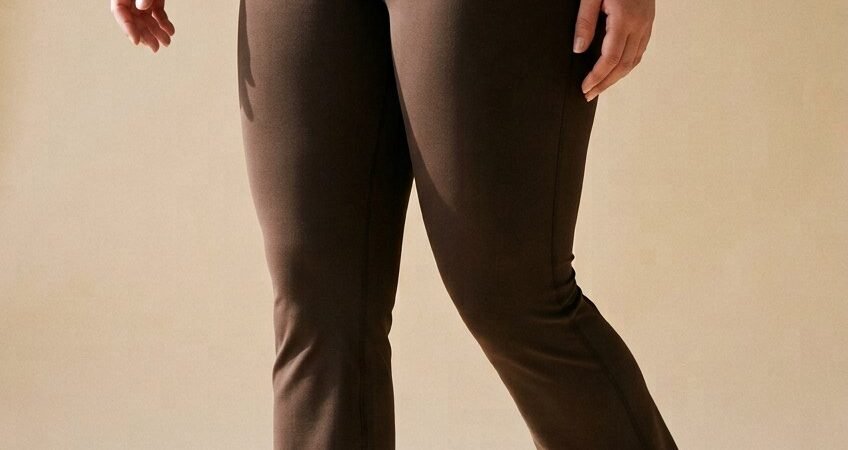
“Squat-proof” is the most abused word in activewear. It should mean one thing: the fabric stays opaque when it is stretched across your body in the bottom position of a squat – not just hanging on a rail in a fitting room. Here is how we test every SWOLELIFT colourway, and how you can test any legging in thirty seconds.
The 30-second mirror test
Put the leggings on, stand sideways to a mirror in bright light, and sink into your deepest squat position. Hold it. If you can see skin tone, seam shadow or underwear lines through the fabric at the knee pit or seat, the knit is sheering under tension – the exact moment you need it most. Do the same in a lunge: the front thigh stretches the fabric lengthwise, the seat stretches it crosswise. Opaque in both directions is the bar.
What actually creates opacity
- Fabric weight and density. Around 250 gsm and up in a tight four-way knit is where opacity starts to survive stretch. Our brushed compression knit sits at 285 gsm.
- Knit, not print. One-piece seamless knits distribute tension across the whole panel; cut-and-sew fabric concentrates stretch at the seams, which is where sheering starts.
- Dark and heather melanges forgive, neon exposes. If a brand only sells pale colourways in a light knit, ask how they tested them.
Why hems and waistbands matter too
Opacity is useless if the legging rides down. A wide, high-rise contouring waistband with no front seam stays put under a barbell, and a long-coverage hem means no gap at the ankle when you sit into a squat. See how this looks built in: Sculpt Flare Second-Skin Legging and Sculpt Scrunch Leggings, both mirror-tested in every colourway we sell.
Run the mirror test on your current pair tonight. If it fails, you now know exactly what to look for next time.